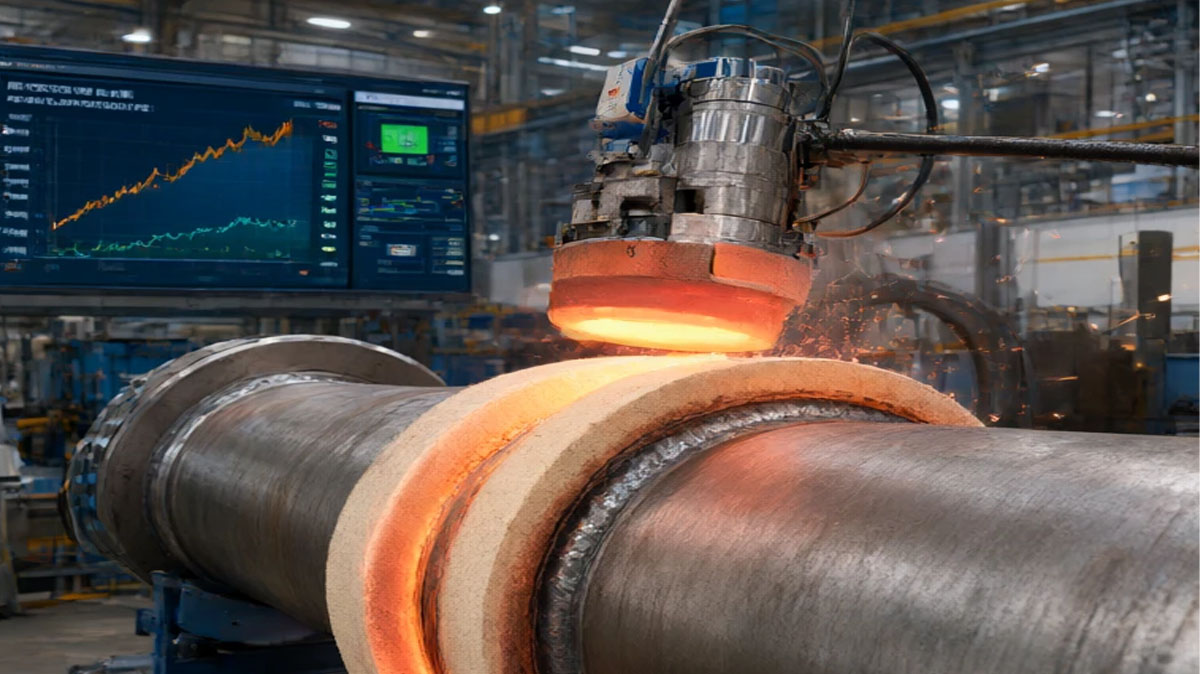
Heat treating metal is a controlled process of heating and cooling metals to change their mechanical and physical properties—such as hardness, strength, ductility, and internal stress—without altering their shape.
What Heat Treatment Is
Heat treatment modifies a metal’s internal microstructure through a sequence of controlled thermal cycles:
- Heating to a specific, predetermined temperature.
- Holding (soaking) at that temperature to ensure uniform internal change.
- Controlled cooling back to ambient temperature.
These changes directly influence performance characteristics like hardness, toughness, and ductility.
Why Heat Treat Metals?
Heat treatment is essential for tailoring metal performance in manufacturing and engineering:
- Increase mechanical strength: Essential for heavy load-bearing components.
- Improve ductility: Makes the material easier to form and machine.
- Relieve internal stresses: Removes stresses caused by welding, forging, or casting.
- Enhance surface properties: Improves wear and corrosion resistance through hardening.
- Additional Benefits: Refines grain structure and restores properties after cold working.
Common Heat Treatment Processes
Different methods are used depending on the desired final properties:
- Annealing: Softens the metal, improves ductility, and relieves internal stresses.
- Normalizing: Refines grain structure for improved uniformity.
- Hardening (Quenching): Rapid cooling to significantly increase hardness.
- Tempering: Reduces brittleness after hardening while retaining necessary strength.
- Case Hardening: (Carburizing, Nitriding) Produces a hard surface with a tough core.
- Solution Treating & Aging: Used primarily for non‑ferrous alloys to enhance strength.
Material & Application Insights
| Material/Type | Typical Treatment | Expected Outcome | Note |
|---|---|---|---|
| Alloy Steels (e.g., 4140) | Annealing, Quenching, Tempering | High strength & wear resistance | Often supplied pre-treated |
| Low Carbon (e.g., 12L14) | Minimal / No Heat Treat | Maintain machining properties | Hardening is ineffective |
| Non-Ferrous Alloys | Solution & Aging | Enhanced strength | Specific to alloy chemistry |
| Surface-Critical Parts | Case Hardening | Hard shell, tough core | Reduces cracking risk |
Summary
Heat treatment remains one of the most important methods for tailoring metal performance, ensuring that materials meet the exact mechanical and physical requirements of modern engineering applications.